
Your business website should be one of the most valuable marketing tools your company owns. Yet for many businesses, it’s something they invest in, launch and then largely leave alone.
It looks professional, contains information about their services and provides a way for customers to get in touch.
Job done, right?
Not quite.
A well-designed business website has the potential to attract potential customers, answer questions, build trust, generate enquiries and support almost every other aspect of your digital marketing.
Yet many businesses still treat their website as little more than an online brochure.
The question isn’t simply whether your business has a website. It’s whether that website is actively working for your business.
Your Website Is More Than an Online Brochure
A traditional brochure tells people what a business does.
A well-planned website should do considerably more.
It should help potential customers understand how your products or services can solve their problems, demonstrate why your business is worth considering and make it easy for them to take the next step.
Think about the different ways someone might arrive at your website.
They could discover your business through Google, click a link in a LinkedIn post, follow a recommendation from a colleague or visit after seeing your social media content.
Whatever brings them there, your website has an important job to do.
It needs to turn that initial interest into something more meaningful.
That doesn’t necessarily mean generating an immediate sale. For some businesses, particularly those offering complex services, the buying process can take weeks or months.
But every visit should give potential customers a clearer understanding of your business and a reason to consider you when they’re ready.
Your Website Works Even When You Don’t
Unlike many traditional marketing activities, your website is accessible around the clock.
Potential customers can research your services, read your content, explore your previous work and find answers to their questions whenever it suits them.
That makes it particularly valuable for businesses whose customers spend time researching before making a decision.
A prospective client might visit your website in the evening, compare your services with competitors and return several days later to make an enquiry.
During that time, your website is effectively representing your business.
But simply being available isn’t enough.
If information is difficult to find, content is outdated or visitors are left wondering what to do next, those opportunities can easily be lost.
A website should make the research and decision-making process as straightforward as possible.
Search Visibility Brings the Right People to Your Website
A website can be beautifully designed, but if potential customers can’t find it, its ability to generate new business will be limited.
This is where search engine optimisation (SEO) becomes important.
SEO helps search engines understand your website and improves its ability to appear for relevant searches.
For example, someone searching for a particular service in their local area may already have a clear intention to find a provider.
If your website appears for that search and provides the information they need, you have an opportunity to attract a genuinely relevant visitor.
But effective SEO isn’t simply about increasing traffic.
It’s about attracting people who are likely to be interested in what your business offers.
That means considering:
- The words and phrases your customers actually search for
- The questions they ask before choosing a provider
- The services and locations your business wants to target
- The quality and relevance of your website content
- The technical performance and structure of your website
- How easily visitors can navigate and find information
A successful SEO strategy should connect search visibility with your wider business objectives.
Because attracting thousands of visitors means relatively little if none of them are interested in becoming customers.
Mobile Performance and User Experience Matter
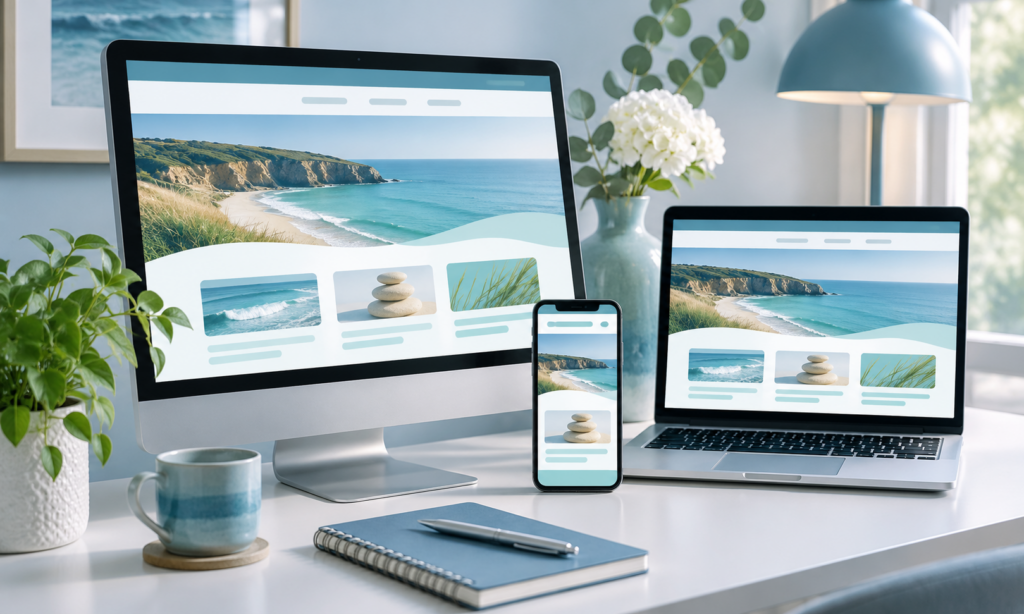
Your website might look excellent on a desktop computer, but how does it perform on a mobile phone?
For many businesses, mobile devices account for a substantial proportion of website visits.
That makes mobile usability an essential consideration.
Visitors should be able to read content comfortably, navigate pages, use forms and find contact information without unnecessary difficulty.
Website speed also matters.
Slow-loading pages, awkward navigation and technical problems can frustrate visitors and discourage them from continuing.
These issues can also affect search performance.
A website doesn’t need to be complicated to deliver a good user experience.
It needs to be reliable, accessible, easy to use and designed around the needs of the people visiting it.
First Impressions Can Influence Customer Decisions
When someone visits your website for the first time, they’re often making quick judgements about your business.
Does it look professional?
Is it easy to understand what the company offers?
Does the information feel current and relevant?
Can they find what they’re looking for?
Does the business appear credible?
These initial impressions can influence whether someone continues exploring or returns to the search results.
A professional website doesn’t necessarily need complicated features or elaborate design.
In many cases, simplicity is more effective.
Clear navigation, readable content, consistent branding, good-quality imagery and straightforward messaging can make a significant difference.
Your website should make it easy for visitors to understand three things:
What you do, who you help and why they should choose you.
If those answers aren’t immediately clear, your website may be creating unnecessary barriers.
Your Website Should Build Trust Before Someone Contacts You
Most customers want reassurance before making an enquiry or purchasing a service.
They want to know that a business understands their needs, has relevant experience and can deliver what it promises.
Your website provides an opportunity to establish that confidence.
Depending on your business, this might include customer testimonials, case studies, examples of previous work, professional credentials or helpful articles demonstrating your knowledge.
An informative About page can also make a difference.
People often want to understand who they’re dealing with, particularly when choosing a service provider.
Trust isn’t created by simply telling visitors that your business is reliable or experienced.
It’s built by providing useful information, showing evidence of your capabilities and communicating consistently.
Your website should begin building confidence long before someone picks up the phone or completes a contact form.
Every Page Should Have a Purpose
One of the most common website problems is a lack of clear direction.
A visitor arrives on a page, reads some information and then reaches the bottom without knowing what to do next.
Should they contact you?
Explore another service?
Read a related article?
Request a quotation?
A well-structured website should guide visitors naturally towards a relevant next step.
This is where calls to action become important.
A call to action doesn’t always need to be a prominent sales message.
It could be something as simple as:
- Find out more about our services
- Explore our recent projects
- Read our customer case studies
- Request a quotation
- Contact our team
- Discover how we can help
The important thing is that each page supports a clear objective.
For example, a blog article might introduce someone to your expertise and encourage them to explore a related service.
A service page might provide the reassurance needed to make an enquiry.
A case study might demonstrate how your business has helped a customer overcome a particular challenge.
When pages are planned around their purpose, your website becomes a more effective part of the customer journey.
Your Website Should Support Your Other Marketing Channels
Digital marketing works best when different activities support one another.
Your social media content might introduce someone to your business.
LinkedIn outreach could start a conversation with a potential client.
An email campaign might encourage someone to explore a particular service.
SEO can help customers discover your business when they’re actively searching.
In many cases, these activities eventually lead people back to your website.
That makes your website a central part of your wider digital marketing strategy.
If your website messaging is inconsistent with your social media content, or the page someone lands on doesn’t reflect what originally interested them, the experience can feel disconnected.
Instead, your marketing channels should reinforce one another.
For example, a LinkedIn post discussing a common industry challenge could direct readers towards a more detailed website article.
That article could then link naturally to a relevant service page.
The service page could explain how your business helps and provide a clear opportunity to get in touch.
Each stage supports the next.
Rather than operating as separate marketing activities, they become part of a connected customer journey.
Content Gives People a Reason to Visit and Return
A website shouldn’t remain unchanged for years.
Regularly reviewing and improving your content helps keep information accurate, relevant and useful.
It also creates opportunities to answer customer questions, demonstrate expertise and target additional search topics.
Blog articles, guides, FAQs, case studies and service updates can all contribute to a stronger website.
However, publishing content simply for the sake of keeping a blog active isn’t necessarily productive.
Every piece of content should serve a purpose.
Perhaps it answers a question your customers frequently ask.
Maybe it explains a service in greater detail.
It could help potential customers compare their options or understand a common challenge.
Useful content can support search visibility, build trust and give your business valuable material to share through social media and email marketing.
It can also help potential customers become more familiar with your business before they’re ready to enquire.

Are You Measuring What Your Website Actually Achieves?
One of the biggest advantages of digital marketing is the ability to measure performance.
Yet many businesses only look at how many people visit their website.
Traffic is useful, but it doesn’t tell the whole story.
A website receiving 5,000 visits per month isn’t necessarily performing better than one receiving 500.
The important question is what those visitors do.
Are they exploring your services?
Are they making enquiries?
Are they completing contact forms?
Are they requesting quotations?
Are they taking the actions that matter to your business?
Tools such as Google Analytics and Google Search Console can help businesses understand website performance and identify opportunities for improvement.
It’s also worth reviewing which pages generate enquiries, where visitors leave the website and which marketing channels attract the most relevant traffic.
Not every visit will lead to an immediate conversion, but understanding how people use your website can help you make more informed decisions.
Your Website Should Evolve With Your Business
Businesses change.
Services develop, customer expectations shift and new opportunities emerge.
Your website should reflect those changes.
A website that accurately represented your business three years ago may no longer communicate everything you offer today.
Perhaps you’ve introduced new services, moved into different markets or changed the type of customer you want to attract.
Maybe your competitors have improved their online presence while your website has remained unchanged.
Regular website reviews can help identify outdated content, technical issues, missed SEO opportunities and areas where the customer experience could be improved.
This doesn’t necessarily mean investing in a complete redesign every few years.
Sometimes targeted improvements to content, navigation, page structure or calls to action can deliver meaningful benefits.
The important thing is to treat your website as an ongoing business asset rather than a one-off project.
Is Your Website Working Hard Enough?
Your website has the potential to do far more than simply provide information about your business.
It can attract new customers through search engines, support social media and outreach campaigns, build credibility, answer questions and generate valuable enquiries.
But achieving those results requires more than attractive design.
It requires a clear understanding of your audience, relevant content, effective SEO, good user experience and regular performance reviews.
A successful website shouldn’t simply look good. It should actively contribute towards your business goals.
At Progress Digital, we help businesses create and improve websites that support their wider digital marketing objectives. From website design and SEO to content and ongoing digital marketing, our approach focuses on making your online presence work harder for your business.
If you’re unsure whether your current website is delivering everything it could, get in touch with Progress Digital to explore how we can help.