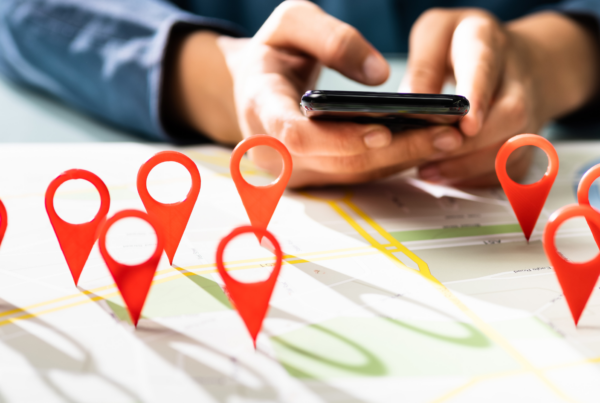

The way people find businesses online is changing.
Not too long ago, the customer journey was relatively straightforward. Someone needed a product or service, they searched Google, looked through a few websites and decided who to contact.
Google still plays a huge role, but it is no longer the only place where discovery happens.
Today, someone might discover your business through a Google search, see one of your LinkedIn posts, check your reviews, visit your website and then ask an AI tool for recommendations before finally getting in touch.
The question for businesses is no longer simply:
“Can people find us on Google?”
It is:
“Can people find, understand and trust us wherever they choose to search?”
Search is becoming more fragmented
There are now more routes into a business than ever before.
Traditional search engines remain incredibly important, particularly when someone has a clear need or is looking for a local service.
But social platforms have also become discovery tools. People use LinkedIn to research businesses and individuals. They search Instagram and TikTok for recommendations, ideas and experiences. They read reviews before deciding whether a company deserves their attention.
And now AI is adding another route.
People can ask AI tools questions in a much more conversational way. Instead of searching for a handful of keywords, they can describe exactly what they need and ask for suggestions, comparisons or recommendations.
That changes the search landscape, but it doesn’t mean everything businesses have been doing until now suddenly becomes irrelevant.
In many ways, the fundamentals matter more.

Google still matters
SEO isn’t disappearing.
When somebody actively searches for a product, service or local business, appearing prominently at the right moment can be incredibly valuable.
For local businesses in particular, this means paying attention to things such as:
- Your Google Business Profile
- Customer reviews
- Relevant website content
- Location and service pages
- Accurate business information
- Website performance and mobile usability
- Helpful content that answers genuine customer questions
Good SEO isn’t simply about getting as many visitors as possible.
It’s about making sure the right people can find you when they’re already looking for what you provide.
Social media creates familiarity
Social media often plays a different role.
Someone might not need your services today, but regularly seeing useful posts from your business means they already know who you are when that need eventually arises.
This is particularly powerful in B2B marketing.
A potential customer may see a LinkedIn post, visit your profile, look at your website and then do nothing.
Three months later, they see another post.
A few weeks after that, a colleague mentions they need exactly the service you provide.
Suddenly, your business is already familiar.
Not every piece of marketing needs to generate an immediate enquiry to be doing its job.
Visibility builds familiarity. Familiarity can build trust. And trust can make the eventual decision much easier.
And now there’s AI
AI-powered search adds another layer to online discovery.
People are increasingly comfortable asking detailed questions rather than typing short search phrases.
They might ask for businesses that provide a particular service, compare different approaches or ask what they should look for when choosing a supplier.
For businesses, this introduces an important question:
Is it clear online exactly what your business does, who you help and why someone should trust you?
AI search doesn’t make your existing digital presence redundant.
Your website content, brand mentions, expertise, business information and wider online presence all help create a clearer picture of your business.
This means businesses shouldn’t necessarily be looking for an entirely new “AI marketing strategy”.
They should start by making sure their existing digital foundations are strong.

Your website connects everything
With so many different discovery channels, it can be tempting to concentrate on whichever platform is getting the most attention.
But your website remains one of the few digital spaces you actually control.
Google can introduce new search features.
Social media algorithms can change.
New AI platforms can appear.
Your website remains the place where you can clearly explain who you are, what you do and why someone should choose to contact you.
That makes it the centre of your wider digital presence.
Someone may discover you somewhere else, but there’s a good chance they’ll visit your website before making a decision.
What they find when they arrive matters.
Don’t think in channels. Think in journeys.
One of the biggest mistakes businesses can make is viewing every marketing channel separately.
SEO sits in one box.
Social media sits in another.
The website is treated as another project entirely.
But customers don’t think like that.
A customer might:
Search → see your business → read your reviews → visit your website → see your LinkedIn profile → return to your website → enquire.
Another might:
See a LinkedIn post → remember your name → search Google later → visit your website → contact you.
And another could:
Ask an AI tool → discover your business → Google your name → read your reviews → visit your website.
These aren’t separate marketing activities from the customer’s perspective.
They’re simply different stages of deciding whether they trust your business.
So where should you focus?
There isn’t one platform every business should prioritise above everything else.
Instead, businesses need to understand how their customers research and make decisions.
Look at where your website traffic comes from.
Look at which pages people visit before enquiring.
Ask new customers how they heard about you.
Pay attention to your Google visibility.
Monitor which social content generates genuine engagement.
And increasingly, think about whether your online content clearly communicates the expertise, services and information that both people and AI-powered platforms need to understand your business.
The goal isn’t to be everywhere.
It’s to make sure that wherever a potential customer encounters your business, they find a clear and consistent reason to keep looking.
Being discoverable is only the beginning
Digital marketing is becoming less about winning a single click and more about building a connected presence.
Google might create the first interaction.
Social media might build familiarity.
AI might introduce another discovery route.
Your reviews might provide reassurance.
And your website might ultimately turn that interest into an enquiry.
The businesses that adapt won’t necessarily be the ones chasing every new platform.
They’ll be the ones making sure all the pieces work together.
At Progress Digital, we help businesses build that connected digital presence through SEO, local search, website design, content and social media.
If you’re unsure how customers are currently finding your business, or whether your digital presence is making the most of that attention, get in touch with Progress Digital.